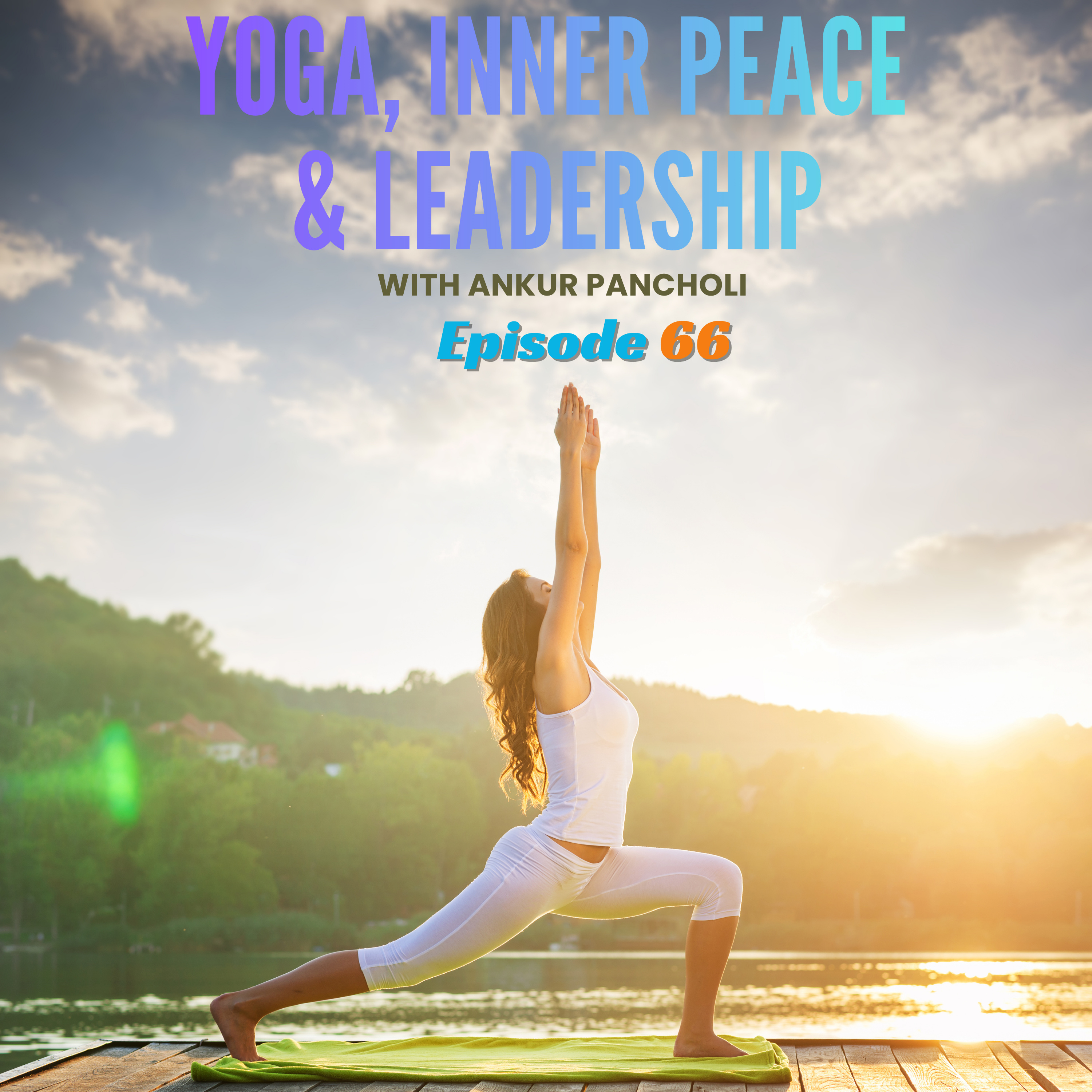
Episode 66: Yoga, Inner Peace & Leadership (Bhagavad Gita 6.19-23)
Tonight's Episode
Welcome back to Beyond the Battlefield — the cinematic leadership podcast inspired by the timeless wisdom of the Bhagavad Gita.
In this profound Episode 66, Jessica and Ankur explore one of the deepest teachings from Bhagavad Gita Chapter 6 — the true meaning of Yoga, inner stillness, freedom from suffering, and a joy that does not depend on the world.
Krishna describes the mind of a yogi like a lamp in a windless place — steady, silent, unwavering.
But what creates the “wind” inside us?
Desire. Fear. Comparison. Ego. Anxiety. Endless mental noise.
This episode explores:
- Why the modern mind constantly flickers
- The difference between pleasure and bliss
- What Krishna means by “Yoga”
- The real source of inner suffering
- Why success cannot create lasting peace
- How leaders lose clarity under pressure
- What true emotional stability looks like
- The psychology of detachment
- Osho’s insights on awareness and silence
- Bhagavad Gita Chapter 6 Verses 19–23 explained deeply and simply
Through cinematic storytelling, leadership examples, meditation insights, and practical reflections, this episode bridges ancient wisdom with modern leadership, entrepreneurship, emotional resilience, and personal growth.
If you’ve ever felt:
- mentally exhausted,
- emotionally reactive,
- dependent on validation,
- anxious about outcomes,
- or disconnected from inner peace…
…this episode may completely change how you understand happiness, meditation, and leadership.
Because Krishna reveals something extraordinary:
Yoga is not escape.
Yoga is freedom from inner suffering.
🎙️ In this episode:
✔ Bhagavad Gita Chapter 6 Verses 19–23
✔ Osho’s Geeta Darshan insights
✔ Leadership psychology
✔ Emotional intelligence
✔ Meditation explained simply
✔ Inner stillness & awareness
✔ Conscious leadership
✔ Freedom from anxiety and mental noise
📩 Write to us: [email protected]
🤖 Explore the Beyond the Battlefield Companion GPT:
Beyond the Battlefield Assistant
https://chatgpt.com/g/g-6845186212588191ae7aa9e327bebc9a-beyond-the-battlefield-assistant?utm_source=chatgpt.com
Welcome back to Beyond the Battlefield. Have you noticed that your mind rarely stays still? One message, one thought, one fear, and everything begins to flicker. Today we explore a state where that flickering ends. Let's begin with the verse 19.
Just as a lamp placed in a windless place does not flicker, in the same way, the mind of a Yogi who has disciplined his inner world and is absorbed in the Self remains perfectly steady. A lamp that does not flicker.
It's such a simple image, but it feels incredibly profound. That's Krishna's brilliance. He doesn't complicate truth. He reveals it through something you can see. Not a storm, not a battlefield, a flame. And if you understand this flame, you understand your mind. So this verse is about meditation. It includes meditation, but it goes far beyond that. This is Krishna describing the inner state of a master. Because the problem is not the flame, the problem is the wind.
The wind. Yes, desire, fear, memory, expectation, ego, reaction, comparison. These are the winds that keep your mind constantly flickering. One message and you react. One opinion and you shift. One failure and your clarity disappears. That is not thinking. That is being blown around. That feels very real today. Because today's world is designed to keep you in wind. Notifications, deadlines, endless inputs. You are not lacking intelligence, you are lacking stillness. So Krishna is not asking us to escape the world.
No, he's asking you to stop being controlled by it. Understand this deeply. The lamp is still burning. It has not gone out. The Yogi is not inactive, he's not dull, he's not disconnected. He's fully aware, just no longer disturbed that. Changes everything. Yes, because many people think meditation means stopping thoughts. Krishna is saying something deeper. It is not about stopping movement, it is about ending flickering. And where does this steadiness come from? From how you live, Krishna already said.
Not too much, not too little. Balance your food, your sleep, your effort, because imbalance creates wind and a restless life cannot produce a steady mind. So steadiness is not created in a moment, it is built in everyday choices. Exactly. You don't become calm in crisis, you reveal whether you were calm all along. Let's bring this into leadership. This verse is one of the most powerful leadership teachings. Most leaders think they are leading, but they are only reacting. 1 Escalation, panic, one number pressure, one opinion, confusion.
That is a flickering mind trying to lead. Then what is true leadership here? A true leader is like that lamp. Praise comes, the flame does not rise. Criticism comes, the flame does not fall. Crisis comes. The flame does not scatter. The light remains. Only the flickering disappears. That means leadership is not about controlling situations, it is about not losing yourself in any situation. In crisis, your team doesn't first look for answers, They look at you. If your mind shakes, the system shakes.
If your mind is steady, clarity spreads silently. So the real question for a leader is not what should I do, it is from what state am I doing this? In the last verse the mind became steady, but Krishna is not stopping there. What happens when even that steadiness becomes silence? With verse 20, Krishna takes us one step further. When the mind becomes completely quiet through the practice of yoga, and in that silence one sees the self by the self and becomes completely content within. One sees the self by the self.
That sounds almost impossible to grasp. Because we are used to seeing everything through the mind. But here Krishna is pointing to something beyond the mind. This is not thinking. This is seeing. This is awareness. So this is meditation. This is the result of meditation, because meditation is not about forcing silence, it is about removing disturbance. Think about it. You don't stop the vane, you simply step out of it and suddenly the flame is still. So the mind doesn't need to be controlled. The mind becomes quiet when it loses interest in running.
Outward desire drops, fear drops, comparison drops. And with that, the noise disappears. And in that silence. Something extraordinary happens. For the first time, you are not looking at the world. You are not even looking at yourself through others. You simply ush. That feels peaceful. It is more than peace, it is contentment without a Causeway. No achievement, no validation, no outcome. Just existence and that is enough. That's very different from how we Live Today, because today we are addicted to conditional happiness.
If this works, I'm happy. If they approve, I'm confident. If I succeed, I'm complete. And Krishna is saying there is a state where none of that is needed. Let's bring this into leadership. This changes everything for a leader because most leaders operate from inner lack. They need results to feel worthy. They need recognition to feel secure, and that makes every decision emotionally loaded. So what does this verse change? A leader established in this state does not act to fill a void. They act from completeness.
No desperation, no insecurity, no hidden agenda. Just clarity. That means leadership becomes lighter and more powerful because when you are not trying to prove anything, you can finally see clearly. So first the mind becomes steady, and now it becomes silent. Yes, and in that silence you discover you were never incomplete. And maybe that's the shift from seeking to simply being. In the last verse we entered a space where the mind becomes silent, where awareness begins to see itself. But what is the nature of that experience?
Krishna answers that now in verse 21. That joy which is infinite, which is grasped by the inner intelligence, and which is beyond the senses. Having experienced that, one does not move from truth. A joy beyond the senses that already sounds very different from what we usually call happiness. Because what we call happiness is mostly sense based. Something happens, you feel good, it goes away and the mind starts searching again. That cycle is dependency. So Krishna is pointing to a completely different kind of joy, and he defines it very precisely.
First sukhum atyantikam, not ordinary happiness, but ultimate, infinite, a joy that has no end. Every pleasure you know has a beginning and an end, but this is not in time. So this is not something that comes and goes. It is something that remains. Then Krishna says Buddhigrahiyam, grasped by the intellect but not the thinking mind. Buddhi means inner clarity, discriminative awareness. This joy is not emotional, it is recognized. You don't feel excited, you know? That's very subtle. Yes, it is closer to truth than to emotion.
Then Krishna adds a Tindriyam beyond senses, no sound, no touch, no external experience. This joy has no trigger, which means it cannot be taken away. All your current happiness is because of something, but this is happiness without object. You are not happy because something happened. You are happy because you are. Then everything we are chasing was never needed. Yes, that's the illusion because we are trained to chase happiness and Krishna is revealing that happiness is your nature. And then Krishna says something very powerful.
Na chalti Tatvata 1 does not move from truth. What does that really mean? It means once this is realized, you cannot fall back into confusion because you have seen what is real and once truth is seen, it cannot be unseen. Understand this clearly. Pleasure depends on the world. Bliss does not. Pleasure creates craving. Bliss ends craving. What does this mean for a leader? It changes the source of action. A leader who is dependent acts from fear acts from need. A leader established in this acts from completeness.
No pressure to prove, No Fear to lose, no emotional instability. Just clarity. And maybe that is the highest success, not achieving more, but becoming so complete that nothing is needed. In verse 21, we explored a state of inner joy beyond senses, beyond conditions, a joy that comes simply from being. If this joy is real, what does it do to a person who truly stabilizes in it? Krishna answers that now in verse 22. Having gained that, one does not consider any other gain to be greater than it, and being established in that state, 1 is not shaken even by the greatest sorrow.
Not shaken even by great sorrow that feels almost impossible. Only because we have never experienced this kind of stability. Krishna begins with something very powerful, yell Labdhava having attained in that state. This refers to everything we just explored. Silent mind, self realization, bliss beyond senses. And then he says no other gain feels higher than this. Not wealth, not success, not recognition. Is Krishna saying these things are useless? He's saying they are no longer the highest. They find their right place, but they stop defining you.
Before this state, you depend on outcomes. If this happens, I'll be happy. If I lose that, I'll suffer. But after this realization, that dependency collapses because you have found something that is complete in itself. So happiness is no longer borrowed. It becomes your nature.
Then, Krishna says. Yasmin's Theta being established in that state. Not a moment, not a glimpse, but stability. So this is not temporary peace, this is permanent grounding. And now the most powerful part, not shaken even by the greatest sorrow, loss, failure, crisis, none of it can shake your center. Does that mean you don't feel pain? No, pain can still happen, but it does not destroy you. You experience it, but you are not defined by it. If something can disturb you, it means you are still dependent.
Krishna is pointing to total inner independence. The world can change, situations can shift, but your centre remains untouched. What does this mean for leadership? It redefines resilience. Most leaders are stable only when things go well. Pressure shakes them. Failure breaks them. Uncertainty confuses them. But a leader established in this is not dependent on outcomes. They don't collapse under pressure. They don't lose clarity in crisis because their foundation is internal. Can you simplify this with an example?
Imagine this, your happiness depends on your phone. If the battery is full, you feel good. If it drains, you feel anxious. That is dependency. Now imagine you have a constant power source within you. The phone can charge or discharge, but you remain powered. That is this state. And maybe that's the real strength, not controlling the world, but becoming so stable that nothing in the world can shake you. We've journeyed through something profound, a steady mind, a silent awareness, a joy beyond senses, and a stability that nothing can shake.
But what do we call this state? In verse 23, Krishna answers that directly. Know that state to be yoga, a state where you are free from your connection with suffering. Free from connection with suffering. That sounds very different from how we define yoga today. Because we misunderstand yoga, we think it is posture breathing technique. Krishna defines it as a psychological freedom. Listen carefully, duhuk sanyog vyog sorrow, your connection to it and the breaking of that connection. So Krishna is not saying suffering will disappear.
Situations will still come, pain may still arise, but your inner attachment to it can end. That is yoga. Suffering is not in the world, it is in your identification with the mind. When you get entangled with thoughts, with reactions, with stories, you suffer. When you step back and simply observe, that connection breaks. So yoga is not changing the world, it is changing your relationship with it. And then Krishna gives a clear instruction nishchain with determination. This is not casual, this is not occasional.
This requires commitment and equally important, anirvind chetasa without discouragement, because the mind will resist, patterns will return. You may feel stuck, but don't give up. Stay with it without frustration. What does this mean for leadership? Most leaders suffer because they are attached, attached to outcomes, attached to identity, attached to control, and that creates pressure, fear, emotional instability. But a leader in this state still acts, still leads, still makes decisions, but without inner suffering.
Krishna is not teaching Arjun. How to escape the battlefield. He's teaching him how to stand in the battlefield without inner disturbance. And maybe that is the real victory, not winning outside, but becoming free inside. And when that shift happens, life doesn't become easier, it becomes clear. And maybe that clarity is the real victory. If this episode gave you a new way to see your mind, do share it with someone who needs that stillness today. Follow, share, and subscribe to Beyond the Battlefield.
You can write to us at Beyond the Battlefield at Outlook dot in and explore the GPT companion link in the description for deeper reflections.
 Apple Podcasts
 Castbox
 Castro
 Goodpods
 Moon FM
 Overcast
 Pocket Casts
 Podbean
 Podcast Addict
 Podcast Republic
 Spotify