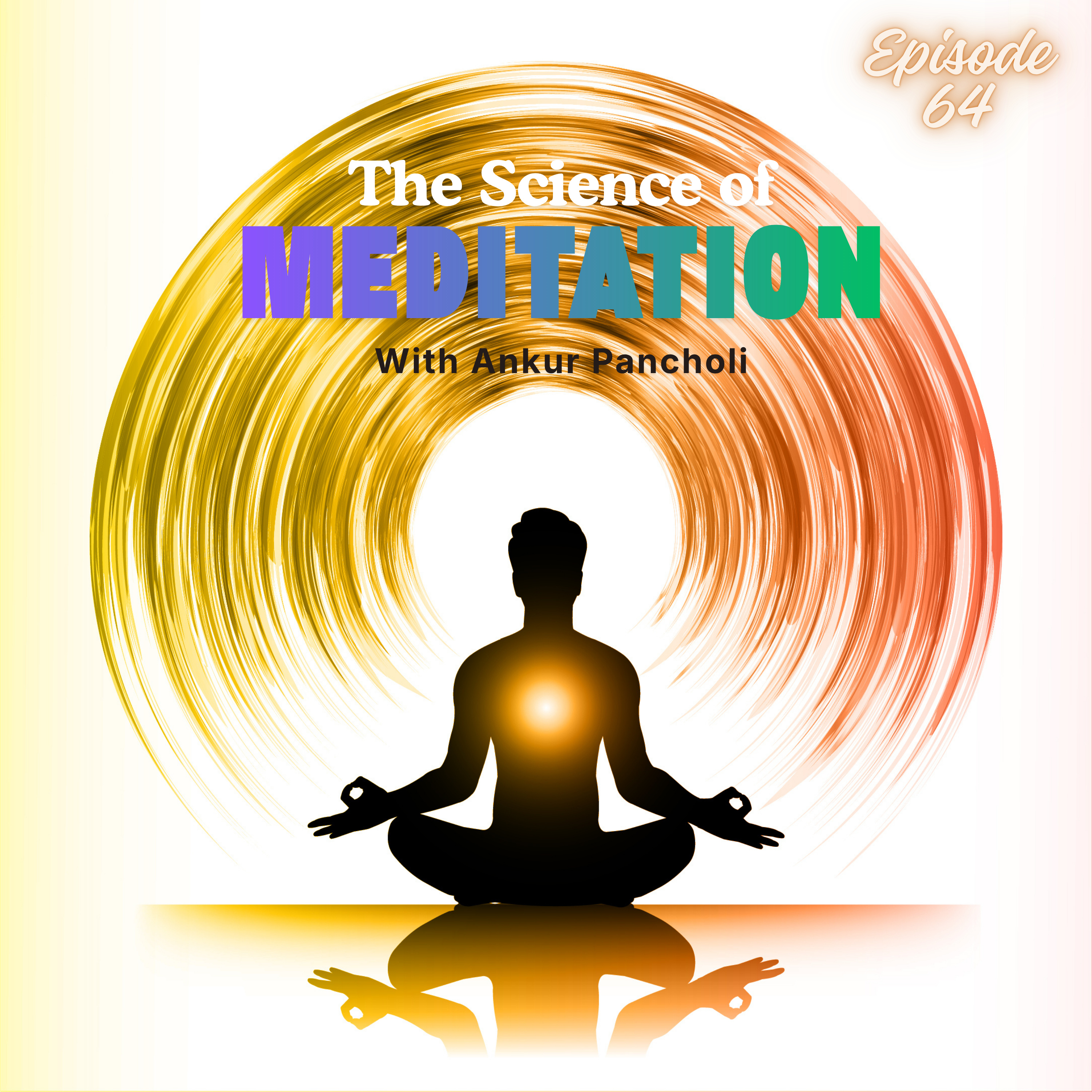
Episode 64: The Science of Meditation | How to Discipline the Mind (Bhagavad Gita 6.10-6.15)
Tonight's Episode
How should you REALLY meditate according to the Bhagavad Gita?
In this episode of Beyond the Battlefield, we explore Bhagavad Gita Chapter 6, Verses 10–15, where Krishna gives a precise, step-by-step framework for meditation. The Bhagavad Gita does not treat meditation as an abstract idea — it presents it as a DISCIPLINE. From where you sit… to how you hold your body… to how you steady your mind — every detail matters.
Layer 2 — Value & Depth
Krishna now shifts from philosophy to PRACTICE.
This episode breaks down:
- Why solitude and environment matter for meditation
- The importance of posture — “steady body, steady mind”
- Why moderation (not extremes) is essential for progress
- How attention is trained — not forced
- The connection between discipline, stillness, and inner clarity
You’ll discover that meditation is not about escaping thoughts…
it is about TRAINING awareness.
As the teaching unfolds, one truth becomes clear:
A restless life cannot produce a still mind.
And a still mind cannot emerge without disciplined living.
This is not just spiritual guidance — it is a complete system for focus, clarity, and inner stability
Layer 3 — Discovery & SEO Expansion
If you are exploring the Bhagavad Gita for meditation, focus, leadership clarity, or emotional balance — this episode is essential. The teachings of Bhagavad Gita Chapter 6 Verses 10–15 offer practical tools to build concentration, reduce distraction, and create a calm, high-performance mind.
Whether you’re a leader, entrepreneur, or seeker — this episode helps you move from chaos to clarity.
This is part of Beyond the Battlefield, where the Bhagavad Gita is translated into real-world wisdom for modern life and leadership.
🔥
CTA
If this episode helped you see meditation differently…
share it with someone who is struggling to focus or find clarity.
Follow, rate, and subscribe to Beyond the Battlefield.
Write to us at [email protected]
And explore our GPT Companion (link in description) for deeper insights.
🔖
SEO Hashtags
#BhagavadGita #Meditation #MindControl #Focus #BhagavadGitaChapter6 #SelfDiscipline #LeadershipMindset #InnerPeace #HighPerformance #BeyondTheBattlefield
https://chatgpt.com/g/g-6845186212588191ae7aa9e327bebc9a-byb-interactive
📩 Write to us: [email protected]
Welcome back to Beyond the Battlefield, where the war is ancient but the struggle is completely modern. Have you noticed you can sit in silence and still feel restless? No phone, no noise, no one around. And yet something inside you refuses to be still. Thoughts keep coming, judgements keep forming, people keep appearing in your mind. Someone you like, someone you dislike, someone you haven't forgiven. And suddenly you're not sitting alone anymore. You are surrounded by your own mind. And that is exactly where episode 63 left us.
Krishna showed us that the real battlefield is not outside, it is within. And as long as that battle continues, you cannot meditate. So in this episode, Krishna does not begin with meditation. He begins with preparation from verse 10 to verse 15. He shows us how to move from inner chaos to inner stillness. So meditation is not the first step. No, becoming ready for it is. But knowing this is not enough, the real question is how do you actually train it? And that's exactly where Krishna takes us now.
Till now he told us who a Yogi is. Now he begins to show how to become one. A Yogi should constantly practice in solitude, alone, with a disciplined mind, free from expectations and free from possessions. So Krishna starts with practice. Yes, because transformation is never accidental. An Olympic swimmer does not train once a week. They don't train only when they feel like it. They train every single day. And the mind is no different. You cannot control it occasionally. You cannot meditate randomly.
Consistency creates transformation. Krishna uses one very powerful word, sattam. It means continuously. This is not a technique, this is a lifestyle. So meditation is not something we do, it's something we live. Exactly. Now Krishna says, think of the mind like milk and the world like water. If milk is poured into water, it mixes, It loses its identity. That's what happens to us when we are constantly surrounded by noise, people, conversations, stimulus. The mind becomes worldly. But if milk is processed into yogurt and then churn it into butter, now it does not mix, it floats.
That is what meditation does. It transforms your mind from something that mixes to something that rises. If you don't protect your mind from the world, the world will shape your mind. But if you train your mind in silence, it will rise above the world. So does this mean we have to leave everything? No, Krishna is not asking you to leave the world. He's asking you to createspace from it one to two hours a day. No phone number, conversation number, external input, just silence and then return to the world.
But now you are not the same. Krishna then says be alone. But this is not physical loneliness. This is freedom from internal noise, emotional carryover, psychological crowd. Most people avoid silence because silence exposes them anxiety, insecurity, unresolved thoughts. That is why distraction feels comfortable now. Krishna says discipline the mind. This connects to what we learned earlier. The mind can be your friend or your enemy. Meditation is not relaxation, it is training. Then comes something very subtle.
Drop expectation. Even this disturbs the mind. I want peace, I want results, I want enlightenment. Expectation is agitation. Finally, let go of holding not just objects, identity, achievements, image, knowledge. You are not holding them, they are holding you. So Krishna is not saying control your mind directly, He's saying create the right conditions and the mind will settle. Daily discipline, solitude transforms the mind from being shaped by the world to rising above it. So Krishna told us something powerful in the last verse, that the mind cannot be mastered randomly, that it needs discipline, solitude and daily practice.
But even that raises a question. So even after creating space, the mind can still resist. So the real question is not just where to sit, but how to prepare yourself to sit. And this is where Krishna becomes incredibly precise. He doesn't jump straight into meditation. He first prepares the space. To practice yog, one should make an asan seat in a sanctified place by placing kush, grass, deerskin and a cloth one over the other. The asan should be neither too high nor too low. Krishna doesn't say just sit, he says establish the seat.
Because the moment you prepare a space consciously, your mind knows something different is about to begin. That sounds very specific. It is, and that's the point. Krishna is not teaching meditation, He is teaching the architecture of meditation. Notice how Krishna moves from space to seat to posture. He's removing disturbance layer by layer. He begins with something simple, a clean place. But clean does not just mean no dust, it means no disturbance. A space where your mind is not triggered, your memory is not activated, your identity is not reinforced.
You can sit in a perfectly clean room, but if that room reminds you of work, of stress, of conflict, your mind will still remain disturbed. The mind works on association. If you sit in the same place every single day, that place becomes a trigger. Just like bed triggers sleep, office triggers work. This space must trigger stillness. And if you return to the same place every single day, you won't need to calm the mind. The place will do it for you. Clean space is not where nothing exists, it is where nothing disturbs you.
Then Krishna says sit on a steady seat. This is not about posture, this is about stability of the system. When the body moves, the mind moves. Every adjustment, every discomfort, every fidget breaks attention. You cannot force stillness, but you can remove disturbance. Krishna is not saying sit still. Somehow he is saying sit in a way that you don't need to move. Stillness is not achieved, it is protected. Why does the height matter so much? Because Krishna is not talking only about the seat. Too high seat creates superiority, too low creates dullness and both disturb awareness.
One is inflated ego, the other is collapsed ego. Ego does not disappear, it only changes posture. And these layers, grass, deer skin, cloth. On the surface, they were used for insulation, to prevent energy loss, to create physical stability. These layers were not just physical protection. They ensured the body remains alert, not dull, because meditation requires awareness, not collapse. But symbolically, these are three layers of preparation. First, KUSA gras means discipline, structure, consistency, foundation.
Second, dear skin means awareness, alertness, sensitivity, natural presence. Third, cloth means comfort, ease, sustainability, balance. Before you try to control the mind, prepare your discipline, your awareness, your comfort. If anyone layer is missing, meditation collapses and there is something even deeper. The seat creates a boundary. When you sit on it, you step out of the world and step into awareness. The seat is not for sitting, it is for shifting identity. So Krishna is not saying sit and meditate.
This is where most people go wrong. They try to control the mind without preparing the conditions. He's saying design the conditions where meditation becomes natural. Verse 10 prepared your life. Verse 11 prepares your space, and only after this can meditation truly begin. When the outer structure is aligned, inner stillness becomes inevitable.
In the last verse, Krishna prepared everything outside us. He spoke about the place, the seat, the setup. But preparation alone is not meditation. So what actually begins the practice? Now Krishna turns inward, not to the mind directly, but to the system that holds the mind. Seated firmly on it, the Yogi should strive to purify the mind by focusing it in meditation with one pointed concentration, controlling all thoughts and activities. He must hold the body, neck and head firmly in a straight line and gaze at the tip of the nose without allowing the eyes to wander.
Krishna begins with focus, but not in the way we think. He does not say force the mind to concentrate. He removes what disturbs it. Meditation is not something you do, it is something that happens when distraction reduces. So the mind is not naturally restless. No, it is constantly pulled by past memories, by future expectations, by sensory inputs. So attention splits and we call it lack of focus. Mind is not unfocused, it is over engaged and if you watch closely you are not thinking, you are being pulled.
Then what does controlling the senses mean? It does not mean suppression. The senses will function, sound will exist, visuals will appear. But the problem is the pattern. Seeing, reacting, hearing, drifting, thinking. Following this automatic chain keeps the mind moving. Meditation breaks the chain. You don't stop the world, you stop chasing it. And then Krishna says something very subtle. Sit, but not casually. Casually. The way you sit decides the state you enter. This is the moment where preparation becomes practice.
Krishna clearly defines the purpose. Not relaxation, not escape, but purification. The mind carries layers. Past impressions, emotional residue, repeated reactions. Meditation clears these layers. Meditation does not give you truth, it removes what is false. And here is something very real. When you sit for meditation, there is a tendency to become dull because the mind is used to stimulation. You don't fall asleep while eating, but you fall asleep while meditating. For the mind, silence feels empty and it escapes into sleep.
So Krishna gives a direct instruction. Keep the body, head and neck aligned. This is not formality, it is functional. The spine is the pathway of awareness. When it collapses, attention drops. Not too loose, not too rigid, balanced. So does it have to be a specific posture? No, you can sit on the floor, you can sit on a chair, as long as you are still comfortable and alert. Meditation is not about the pose, it is about the state. When the body becomes still, you begin to see the mind. Movement hides it, stillness reveals it.
Krishna gives a very specific instruction here. He says focus on the tip of the nose. Why something so precise? This is not about the nose, it is about attention. The mind becomes restless when it keeps moving outward from object to object. So Krishna gives it a gentle anchor, not too far, not too stimulating, not too engaging, just enough to stabilize attention. If you look for mind starts exploring. If you close eyes immediately, mind may drift into imagination or sleep. But this position keeps you alert and inward.
So should everyone literally focus on the nose? No, this is a method, not a rule. You may focus lightly on the tip of the nose, or keep the gaze relaxed, or even close the eyes, but the purpose remains the same, to stop the outward movement of attention. Krishna is not controlling your eyes, He is guiding your awareness inward. And Krishna adds one final detail. Stabilize the gaze. This is not about staring, it is about stopping outward search. When the eyes stop moving, attention turns inward. When eyes stop searching, mind stops wandering.
So Krishna is not asking you to control the mind directly. He is aligning the system. Body becomes steady, senses stop pulling, attention stabilizes, and then the mind settles on its own. When the system is aligned, the mind no longer needs control. So Krishna helped us sit. He aligned the body, steadied the gaze, reduced distraction. But even after all that, the real question remains what should be happening inside? That's exactly where Krishna takes us now. Until now he was preparing the system.
Now he defines the state of the meditator thus. With a serene, fearless and unwavering mind and staunch in the vow of celibacy, the vigilant Yogi should meditate on me, having me alone as the supreme goal. He begins with peace. Yes, but not the peace we try to manufacture. Most people try to become calm. They control thoughts, suppress reactions, and that creates more tension. Peace is not something you create, it is what remains. When disturbance drops, you don't become peaceful, you stop disturbing yourself.
And then he says, be fearless. Yes, and this is where meditation becomes real. When you sit in silence, you begin to face yourself. Unfinished thoughts, hidden emotions, inner emptiness. And that creates fear. But this fear is not danger, it is resistance. Fear survives only when you avoid awareness. When you remain present, it dissolves. And then comes a word many people misunderstand Brahmacharya. Yes, and we need to understand this correctly. People reduce it to celibacy, but Krishna is pointing to something deeper.
It is about conserving energy. Where your attention goes, your energy flows. In nature, even animals follow cycles. They engage in procreation only when needed. Not as constant indulgence but humans with freedom and intellect convert it into continuous stimulation and that scatters energy. Ancient systems were very clear about this. Maharshi Patanjali says Brahmacharya leads to increase in vital energy.
Ayurveda goes even deeper. This life energy is the foundation of physical, mental and spiritual strength. When it is wasted, mind becomes unstable, energy becomes weak, clarity drops. But when it is conserved, it builds strong will, sharp intellect, stable attention, deeper awareness. So it's not just physical restraint. Not at all. It begins much earlier. Thought, conversation, imagination, desire. All these are movements of energy. If they are uncontrolled, energy keeps leaking. Energy is 1. It can become desire, it can become distraction.
It can become awareness. The difference is direction. When it moves outward, it becomes indulgence. When it turns inward, it becomes meditation. And then Krishna says control the mind, but not by force. You cannot directly control the mind. The more you try, the more it resists. But when energy is conserved, senses are quiet, body is steady, the mind settles naturally. And now Krishna gives the most important instruction. Let the mind rest in the divine. This is necessary because an empty mind cannot stay empty.
It will go back to thoughts, to desires. But when it rests in something higher, it stabilizes. This is not about belief, it is about dissolving the ego into something larger. When you are centered in the higher, there is no you left to be disturbed. So Krishna completes the process here. Prepare the environment, align the body, stabilize attention, conserve energy, remove fear, drop disturbance, and then the mind naturally rests in the divine. So meditation is not just sitting, it is becoming peaceful, fearless and energetically aligned so the mind can rest in something higher.
So Krishna has prepared everything. The body is steady, the mind is disciplined, the distractions are reduced. But Ankur, if someone actually reaches this state, does their inner world actually change? That's where Krishna shifts from preparation to result. When the mind is trained this way, it enters a state of deep peace and becomes established in the highest reality. So this is not something you do anymore. No, this is what happens when everything is done right. Peace is not achieved, it is revealed.
This idea of controlling the mind feels unrealistic in today's world. Because we misunderstand control. Control is not suppression. Control is not force. It is direction. A mind that is no longer drifting without awareness. The mind is constantly moving outward, running toward people, running toward achievement, running toward stimulation, and anything that keeps running cannot experience peace. Meditation is not about stopping the mind, it is about bringing it back. This is not philosophy, it is deeply practical.
When attention stabilizes, cognitive noise reduces, emotional reactivity drops, and clarity increases. This is why the best decisions never come from a restless mind. But today there are so many techniques. Breath, mindfulness, silence. How do we know what actually transforms us? This is where Krishna becomes extremely precise. He says the mind must be anchored in the highest possible state because what you consistently focus on is what your mind becomes. Breathe based meditation improves focus.
Object based meditation improves attention. But they don't fully transform the mind. Transformation happens when the mind rests on something higher than itself. What does that mean practically? It means anchoring your mind in clarity instead of confusion, truth instead of perception, awareness instead of reaction, purpose instead of validation. This is what Krishna calls the highest. The moment your attention rests in the highest, the lower begins to dissolve automatically. You don't fight distraction, you outgrow it.
So how does someone apply this daily? Start simple, stabilize attention, reduce external noise, choose a higher anchor. That anchor can be breathe for stability, awareness for clarity, values for direction, presence for depth. And overtime the mind reorganizes itself and this will lead to a state where you are no longer reacting, no longer pulled, no longer scattered, but centered. And from that centre, peace becomes your default. So Krishna is not teaching escape, He's teaching stabilization, a mind so stable that external situations lose their power over you.
So meditation is not about withdrawing from life, it is about becoming so stable that life cannot shake you.
So if we step back and look at this entire journey, Krishna didn't just teach meditation, he taught preparation, he taught discipline, he taught awareness. And then he revealed something far more powerful that peace was never missing. Yes. What we call stress, what we call anxiety, what we call lack of clarity, is not because peace is absent. It is because the mind is scattered. And the moment the mind stabilizes, peace is no longer something you search for, it becomes something you live from. So the real question is not how do I find peace, but what am I allowing to disturb it every single day?
And that is where leadership begins. Not in strategy, not in control, but in inner stability. Because a restless mind creates reactive decisions, but a stable mind creates clarity, direction and impact. So Krishna's message is simple, Train the body, stabilize the mind, anchor your awareness, and peace will stop being a goal and become your foundation. And maybe that's the real shift. Leadership is not about controlling the world, it is about not being controlled by it. What Krishna is teaching here is not just personal peace, it is the foundation of human excellence.
There is something we often forget. Before laboratories, before supercomputers, before modern science, there was a civilization that explored reality with nothing but a trained mind. Ancient India did not begin with instruments. It began with inner stillness. From that stillness emerged a civilization that understood the body before modern biology, a civilization that performed surgery before modern medicine, a civilization that mapped the stars before telescopes, a civilization that built metals that still don't decay, and beyond all this, a deep understanding of mind itself.
This was not coincidence. This was not luck. This was the result of disciplined attention. This is what happens when the mind stops leaking energy and starts becoming a force. A mind that is not scattered becomes powerful. A mind that is not distracted begins to see, and a mind that is trained in stillness can access intelligence far beyond noise. What you experience today is not just meditation, it is the same doorway through which an entire civilization discovered truth. But listening once is not enough.
Just like an athlete, just like a musician, this requires practice. So we've created something for you, a subscriber only guided experience where we take everything from Bhagavad Gita Chapter 6 verses 10 to 15 and turn it into a complete daily meditation practice. Step by step, voice guided. So you don't just understand this, you live it. If something in you felt this today, don't ignore it. This is where your journey begins. Subscribe now and unlock your guided meditation episode or write to us directly beyond the battlefield at Outlook dot in.
And if you want to go even deeper, your personal Gita companion GPT is waiting for you inside the description because this battlefield is not outside.
 Apple Podcasts
 Castbox
 Castro
 Goodpods
 Moon FM
 Overcast
 Pocket Casts
 Podbean
 Podcast Addict
 Podcast Republic
 Spotify