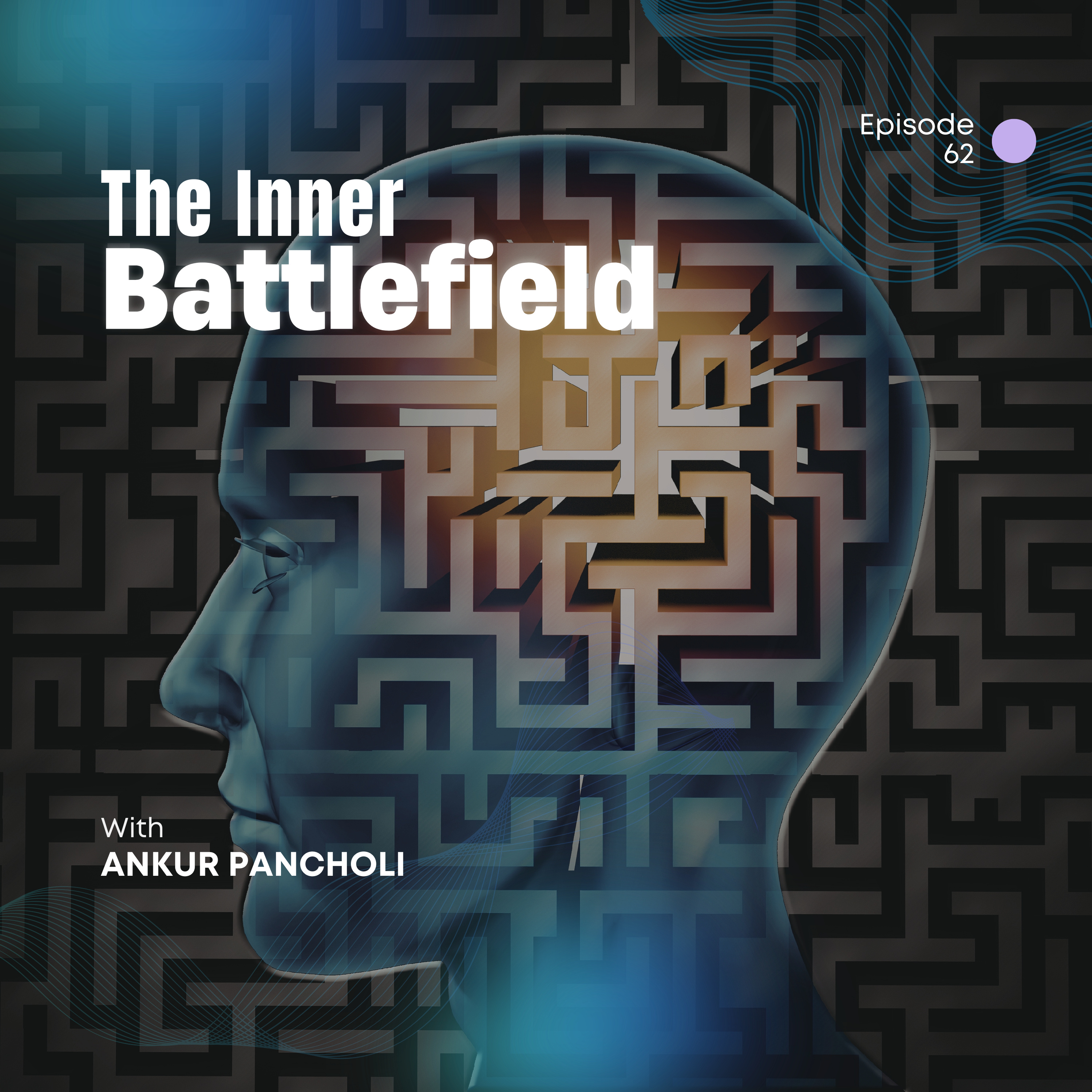
Episode 62: The Inner Battlefield | Why Your Real War is Within (Bhagavad Gita 6.1-6.4)
Tonight's Episode
What if the real battlefield of the Bhagavad Gita is not Kurukshetra… but your own mind?
In this episode of Beyond the Battlefield, we dive deep into the Bhagavad Gita Chapter 5, uncovering a powerful truth — your greatest conflicts are not external, they are internal. The Bhagavad Gita reveals that every tension, every struggle, every emotional reaction is part of an ongoing inner Mahabharata. And unless this inner war is understood… no external victory will ever feel complete.
Through timeless wisdom and modern leadership parallels, this episode explores why we constantly find ourselves in conflict — at work, in relationships, and within ourselves.
You’ll discover:
- Why most conflicts are not about situations… but about inner unrest
- How ego transforms small disagreements into lifelong battles
- The hidden psychology of blame — and why we avoid looking within
- How the Bhagavad Gita explains inner conflict as ignorance, not circumstance
- Why true leadership begins with mastering your inner state
As highlighted in deep insights from Osho’s Geeta Darshan , the Mahabharata is not an event — it is a continuous inner struggle shaped by ego, conditioning, and unconscious reactions.
This episode connects ancient wisdom with modern leadership — helping you see how clarity, awareness, and inner stillness are the real tools of transformation.
If you are exploring the Bhagavad Gita for leadership, personal growth, emotional intelligence, or self-mastery — this episode offers a powerful lens. Whether you’re a leader, entrepreneur, or seeker, the teachings of the Bhagavad Gita Chapter 5 will help you understand conflict, decision-making, and inner clarity like never before.
This episode is part of the Beyond the Battlefield podcast — where we translate the Bhagavad Gita into practical wisdom for modern life, leadership, and high-performance thinking.
🔥
Call To Action
If this episode shifted your perspective… share it with someone who needs this today.
Follow, rate, and subscribe to Beyond the Battlefield for more deep dives into the Bhagavad Gita.
Write to us at [email protected]
And explore our GPT Companion (link in description) for deeper reflections.
https://chatgpt.com/g/g-6845186212588191ae7aa9e327bebc9a-byb-interactive
#BhagavadGita #BhagavadGitaForLife #LeadershipLessons #InnerConflict #SelfMastery #PersonalGrowth #EmotionalIntelligence #SpiritualLeadership #GitaWisdom #BeyondTheBattlefield
Welcome back to Beyond the Battlefield. The battlefield we explore here is not only the one Arjuna faced thousands of years ago, it is the battlefield inside the human mind. In the previous chapter, Krishna explored a question that has confused seekers for centuries. Should a spiritual person leave the world or stay in the world and continue acting? And Krishna's answer was surprising. He did not recommend escape. He recommended karma yoga, the path where spirituality is practiced while fully participating in life.
So chapter 6 begins right there. Krishna continues comparing 2 paths, Karma sanyas, renouncing worldly duties and karma yoga, performing those duties with devotion. And Krishna again points towards something powerful. When work is performed with devotion, it begins to purify the mind, and when the mind becomes quiet, meditation naturally becomes possible. And that is why the chapter on meditation begins with a surprising statement. Krishna redefines something people had misunderstood for centuries.
Who is the true renunciate? Who is the true? Yogi. And that is exactly what Krishna answers in the very first verse. Krishna begins a chapter on meditation by talking about action, where he overturns one of the biggest misunderstandings about spirituality. The one who performs the work that must be done without depending on the result. That person is the true sanyasi and the true Yogi, not the one who merely abandons rituals and not the one who becomes inactive. Wait, so Krishna is redefining spirituality here?
Yes, let's understand the verse slowly. The first word is very important. Krishna begins with Anashrita Karmufalam. It means not leaning on the fruits of action. Not leaning. Yes, you still act, you still plan, you still work hard, but your inner peace is not dependent on the result. Krishna is not rejecting results. Krishna is not saying results are unimportant. Results matter. They guide learning, they guide improvement. But your identity should not depend on them. So success should not inflate us.
And failure should not destroy us. Then Krishna says something deeper. The next phrase is karyam karma karothi ya. It means the one who performs the work that ought to be done. So not random action. Exactly. Not compulsive busyness, but right action, necessary action, action aligned with Dharma. And then Krishna says something shocking. That person is the true sannyasi. Wait, so the person working in the world can be a renunciate? Yes, because real renunciation is not giving up action, it is giving up attachment.
That same person is also the true Yogi. So yoga is not escape. No, Yoga is inner balance within action. Then Krishna clarifies something. The Yogi is not the one who merely gives up fire rituals and not the one who becomes inactive. This verse tells us something profound. Meditation does not begin by living life. It begins in the middle of life, in the middle of responsibility, in the middle of work, in the middle of action. And when action becomes free from attachment, the mind becomes lighter, and a lighter mind naturally becomes ready for meditation.
But something interesting happens next. Krishna uses 2 words that often confuse people. Yes, sanyasa and yoga and many people think they are different. But Krishna says something remarkable in the very next verse. He says what people call sannyasa. That itself is yoga. This verse we just explored chapter 6 verse one. It feels familiar, almost like Krishna has said this before. That is a very sharp observation and noticing that means you are actually reading the Gita the right way because the teaching in chapter 6 verse one does sound very similar to several verses in chapter 2 and chapter 3.
In chapter 2, Krishna introduced the foundation. He told Arjuna, do your duty but do not depend on the fruits. And then he said something powerful. Perform action with equanimity. And then one of the most famous statements of the Gita yoga is excellence in action. So chapter 2 introduces karma yoga, Yes. That is where Krishna first opens the door. Then in chapter 3, Krishna reinforces the idea. He tells Arjun one who controls the mind and performs action is superior. And then he says again, perform duty without attachment and even deeper, offer your actions to the divine and act without anxiety.
So chapter 3 explains how to act. Exactly. Chapter 2 introduces the principle, Chapter 3 explains how to live it. And now in chapter 6 Krishna says something very direct. The one who performs duty without depending on the fruits. That person is the real Yogi and the real Sanyasi. But something important is happening here. Between chapter 3 and chapter 6, something subtle happened. What happened? People misunderstood Krishna. They thought if attachment is the problem, maybe we should stop acting.
And they thought spirituality meant escaping action. And this misunderstanding existed even in ancient India. People believed spirituality meant leave the world, give up responsibilities, become inactive. But Krishna says that is not yoga. So Krishna is redefining renunciation. Yes. In traditional thinking, sanyasa meant leaving the world, giving up family, giving up profession, giving up responsibilities, giving up social duties. But Krishna challenges that the real sannyasi is not the one who abandons action, but the one who abandons attachment.
So Krishna completely overturns the common idea of renunciation. Yes, you can remain in the world. You can lead, you can build, you can serve and still walk the path of yoga. But Krishna now goes even deeper. He says the real obstacle on this path is not action, it is something happening inside the mind. So why does Krishna repeat this idea again here? Because chapter 6 is about meditation, this chapter is called Dhyan Yog, the Yoga of Meditation. But before teaching meditation, Krishna must clear something.
What does he need to clear? That meditation cannot grow in a restless mind, a mindful of guilt, a mindful of unfinished responsibilities, a mind trying to escape life. If someone runs away from action and sits to meditate, the mind will still be restless. So meditation begins with right action. Yes, first act rightly, then the mind becomes calm, and then meditation becomes possible. But Krishna also reminds us of something important. Meditation does not stand separate from life. It grows out of right action.
So Krishna repeats the same truth on purpose. Yes, because human beings forget we understand something intellectually, but emotionally we fall back into fear, comparison, ambition, insecurity. So Krishna repeats the principle again and again, and each time the teaching becomes deeper. But Krishna is not finished yet. In the very next verse, he takes this idea even further. He says something fascinating. What people call renunciation know that to be yoga and without giving up Sankalpa, no one becomes a Yogi.
That sounds like Krishna is merging 2 ideas, renunciation and yoga. Yes, and this is where Krishna removes another ancient misunderstanding. In those times, people believed there were two separate paths. One path was sanyasa, that meant living the world, living family, living profession, living responsibility. And the other path was yoga, the path of discipline, meditation, spiritual practice. So people thought these were different journeys. Yes, but Krishna says something radical, what people call sanyasa, that itself is yoga.
So renunciation does not mean escaping the world. Number Krishna is redefining renunciation completely. True renunciation is not leaving action, it is leaving attachment. Because now a leader can be a Yogi, a teacher can be a Yogi, a parent can be a Yogi, a founder can be a Yogi. Spirituality is not about where you live, it is about how you act. But then Krishna introduces a very important word, sankalpa. And this is the heart of the verse. Krishna says without renouncing Sankalpa, no one becomes a Yogi.
Sankalpa means the mind's constant projections, the ego stories about itself, the identity we build around desires. The mind keeps saying things like I must achieve this, I must prove myself, I must defeat others, I must become successful, I must control outcomes. All these mental projections are sankalpa. Can you give a simple leadership example? Modern leaders suffer from constant projection comparison, identity built around success, fear of losing status. But Krishna suggests a different leadership model.
Act fully, lead strongly, make decisions, but internally do not build your identity around outcomes. And that creates a calm and fearless leader. So Krishna says this before teaching meditation for a reason. Chapter 6 is about meditation, but meditation cannot happen if the mind is full of sankalpa. You may sit with closed eyes, but the mind will still be running, planning, comparing, imagining, competing. So Krishna says first reduce sankalpa, then the mind becomes calm and only then meditation becomes possible.
But now Krishna takes the teaching one step further. And in verse 3 Krishna explains something incredibly practical. He explains that the spiritual journey has stages. For the seeker who wants to rise in yoga, action is the means. But for the one who is already established in yoga, inner stillness becomes the means. So Krishna is describing 2 different kinds of seekers. Yes, 2 stages on the path. The first stage is called Arurukshu. It means a person who wants to climb into yoga. Imagine someone standing at the bottom of a mountain.
They want to reach the summit, but they have not started climbing yet. That is the beginner stage for most people. The mind is still restless. It is pulled by desires, it is pulled by ambition, it is pulled by fear. And Krishna says something very important here. For such a person, action is the path. So beginners should not run away from action. No, they should use action as training. Most people have unfinished responsibilities, strong desires, restless thinking. If such a person suddenly stops acting and sits to meditate, the mind becomes even more chaotic.
So meditation becomes difficult because the mind has not yet been purified. The second stage is called yoga rood. It means a person who has already become established in yoga. For such a person, the mind is already calm, desires are weaker, emotions are balanced, clarity has emerged, and now Krishna says something beautiful. For this person, stillness becomes the path because the mind is already stable. Now meditation becomes natural. This verse reveals something incredibly intelligent. Stage 1A restless mind, so action purifies it.
Stage 2A. Calm mind, so stillness deepens it. That feels like learning any skill. Yes, think about learning music. A beginner must practice constantly scales, exercises, repetition, that is action. But when someone becomes a master, sometimes just sitting quietly with the instrument, music emerges naturally. So action prepares the ground and silence reveals the depth. Exactly. This verse also prevents a big mistake. Many people try to jump directly to the second stage. They say I will renounce action, I will meditate, I will withdraw.
But the mind is still restless, so meditation becomes frustration. And that's why Krishna says do not escape action too early. That also feels very relevant in modern leadership. Many leaders believe clarity will come by stepping away, but Krishna suggests something different. Right action creates clarity. Working sincerely exposes ego, builds discipline, reveals blind spots, and gradually the mind becomes more aware. So action becomes a training ground for consciousness.
And in the next verse, Krishna reveals something even deeper, how we recognize when a person has truly become established in yoga. When a person is no longer attached to sense pleasures, nor attached to actions themselves, and has renounced all mental projections, that person is said to be established in yoga. So this verse explains the word Krishna used earlier. Yes, in the previous verse Krishna used the word yoga Rude. It means a person who has become established in yoga. Krishna says such a person is no longer attached to sense objects, pleasure, possessions, entertainment, stimulation.
Krishna is not saying these disappear from life. He is saying the person is no longer psychologically dependent on them. But Krishna then says something even deeper. The Yogi is also not attached to actions themselves. Earlier Krishna said act without attachment to results but now he goes deeper. The Yogi is no longer attached to the identity of being the doer. So even action can become an attachment. Yes, many people give up pleasure, but then they become attached to being virtuous. They think I meditate daily.
I am disciplined, I am spiritual, I am more evolved than others, and now the ego hides inside spirituality. This is a subtle trap, and Krishna is warning us about that trap. Then Krishna gives the final sign, sarva sankalpa sanyasi. It means one who has renounced all sankalpa, the mind's constant projections, the endless inner voice saying. I must become this. I must prove myself. I must achieve that. I must control outcomes. When these projections dissolve, the mind becomes quiet. So this person still lives in the world.
They may still act, they may still lead, they may still create. But internally, no craving, no compulsion, no psychological dependency. Action becomes natural, simple, clear. So today Krishna quietly revealed a complete map of inner growth. First he redefined renunciation, then he showed us the danger of Sankalpa, the mind's constant projections. And finally, he revealed what a truly established Yogi looks like. He began by redefining renunciation not as escaping action, but as freedom from attachment.
And then he showed us something even deeper, that the real obstacle on the path is not the world, but the mind's constant projections. Yes. When the mind is full of Sankalpa, constant projections about the future, constant attempts to control outcomes, meditation becomes impossible. But when action becomes free from attachment, the mind becomes lighter and gradually stillness begins to appear.
But Krishna is not finished yet. In the very next verse he reveals something extraordinary, a teaching that can completely change how we understand the mind. He will say, Krishna will say something extraordinary, that your greatest enemy and your greatest friend are not outside you. And that is where we will continue in our next episode. Thank you for joining us today on Beyond the Battlefield, where ancient wisdom meets modern leadership. If this conversation helped you reflect, share it with someone who might need it today.
Don't forget to follow and subscribe so you never miss the next episode. And if you have thoughts, reflections, or questions, write to us at [email protected]. And don't forget to explore the GPT companion link in the description for deeper insights from the Bhagavad Gita. Until next time, stay aware, stay courageous, and keep walking beyond the battlefield.
 Apple Podcasts
 Castbox
 Castro
 Goodpods
 Moon FM
 Overcast
 Pocket Casts
 Podbean
 Podcast Addict
 Podcast Republic
 Spotify